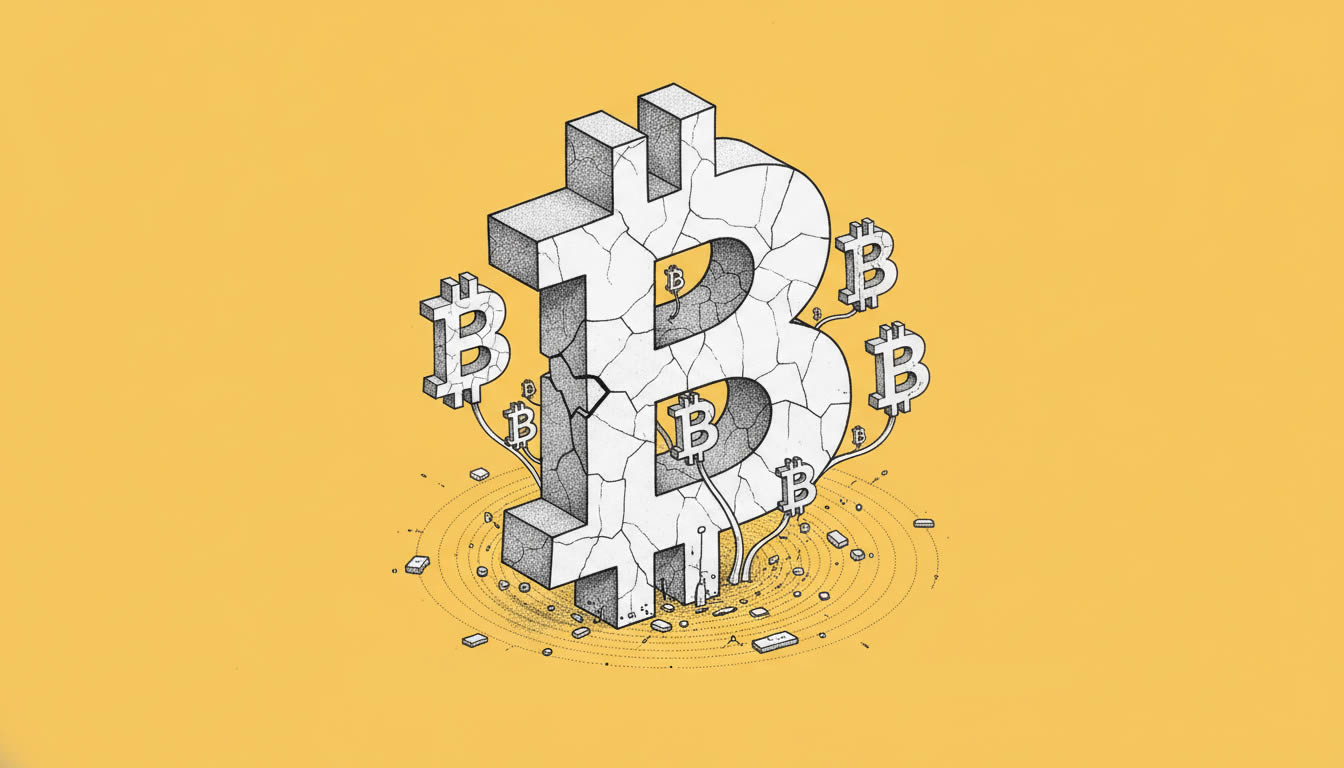


On July 23, Bitcoin’s 30-day apparent spot demand sat at roughly –206,000 BTC. That is not a soft reading. It means the market was absorbing far less coin than miners were issuing and old holders were reactivating. Price was stuck in the low $60,000s. The tape felt empty.
Three weeks later the same metric was hugging zero — about –5,000 BTC — for the first time since February 26, 2026. By the last week of August, CryptoQuant’s...
Crypto is turning GPU time into a tradable commodity
Written on .
In May 2026, three major venues listed cash-settled GPU futures within sixteen days. CME partnered with Silicon Data. ICE followed with Ornn. Architect’s American Innovation Exchange joined shortly after. At least six ETF filings appeared before a single contract traded. Larry Fink had already framed the thesis: compute is becoming an asset class. AI capital expenditure hit roughly $765 billion that year, surpassing oil and gas for the first...
Drop in Hashrate: What Does It Mean for Bitcoin?
Written on .
In mid-August 2026, Bitcoin’s network hashrate sits roughly 17% below its all-time high. Trackers show it retreating from a late-2025 peak above one zettahash per second into a range near 850–920 exahashes per second. Difficulty has followed, posting year-over-year declines for only the second time in the network’s history. Public miners are redirecting power and capital toward artificial-intelligence data centers. Hashprice has compressed....
Bitcoin’s Post-Coldcard Migration: Self-Custody Crisis or Exchange Resurgence?
Written on .
A five-year-old firmware build error in Coldcard hardware wallets turned one of Bitcoin’s most trusted self-custody tools into the largest hardware wallet exploit on record. Starting July 30, 2026, attackers exploited weak entropy in seed generation—routing through a software PRNG instead of the intended hardware RNG—draining roughly 1,600–2,000 BTC (estimates ranging $116–130 million) across thousands of addresses in successive waves. No...
The Agentic Economy: Kite Payment Layer & Bitget’s AI-native trading
Written on .
The next phase of crypto and AI is not more chatbots. It is machines that hold money, spend money, compete for money, and trade money under programmable constraints. This is the agentic economy: autonomous software agents acting as economic participants rather than mere interfaces.
Messari’s work on Kite frames the core bottleneck clearly. Agents can already research, plan, and recommend. What they still largely cannot do is...