

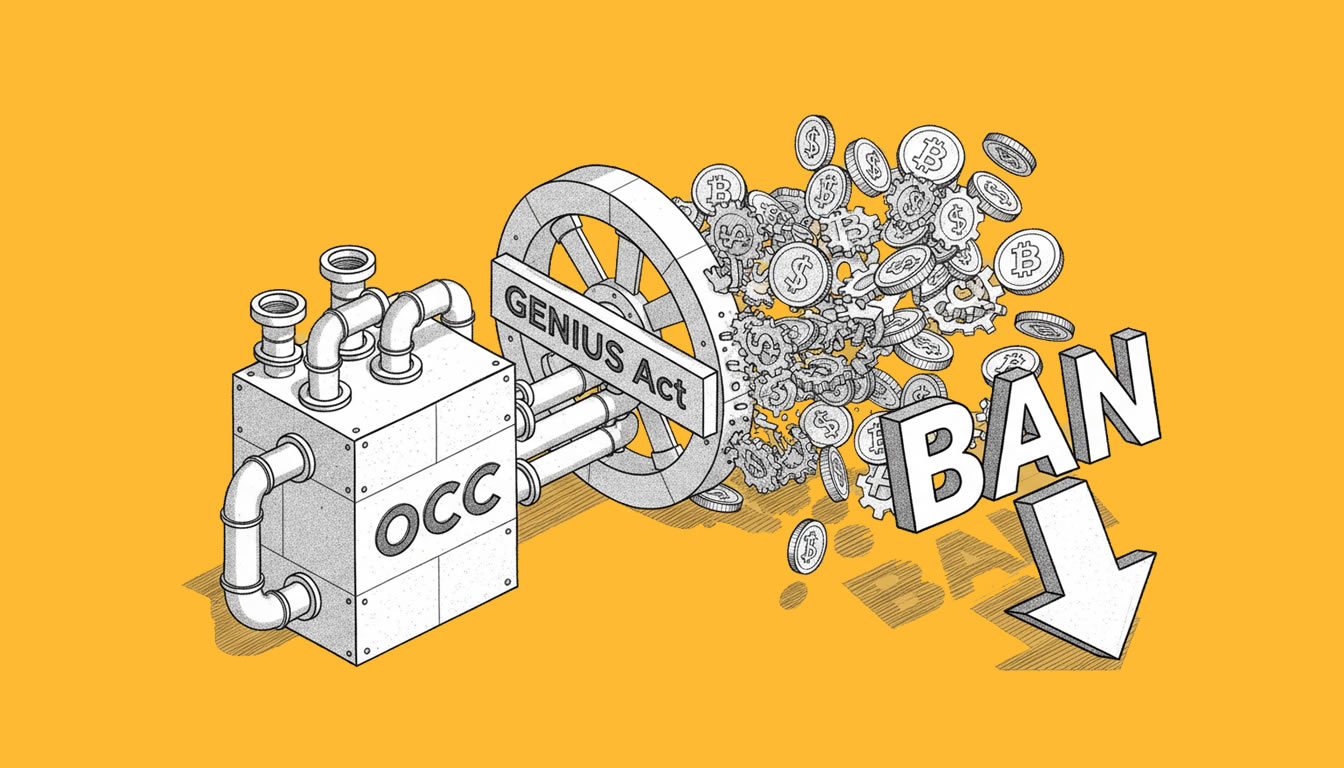
- The OCC’s 376-page proposal implements the GENIUS Act by prohibiting yields on payment stablecoins, including through affiliates or third parties.
- Industry experts view it as an overreach beyond the statute, potentially disrupting models like Circle-Coinbase partnerships.
- The rule sets a 60-day comment period, with crypto firms gearing up to challenge presumptions on yield evasion.
The Office of the Comptroller of the Currency has released a comprehensive proposal to implement the Guiding and Establishing National Innovation for U.S. Stablecoins Act, focusing on a strict ban on yields for payment stablecoins that could reshape the crypto sector’s economic models.
Enacted in July 2025, the GENIUS Act prohibits stablecoin issuers from paying interest or yield directly to holders. However, the OCC’s proposed rulemaking goes further by introducing a rebuttable presumption that arrangements involving affiliates or related third parties—such as white-label partnerships—violate this ban if they result in yields being passed to holders.
This presumption aims to prevent evasion of the law, where issuers might indirectly fund rewards through platforms like exchanges. Issuers can rebut it by providing evidence to the OCC, but the burden lies on them to demonstrate compliance.
In the CoinDesk analysis, Todd Phillips, a former FDIC lawyer, noted that “the OCC has clearly gone beyond what the statute requires,” highlighting potential flexibility but also the risk of broader restrictions on rewards programs.
The proposal also addresses other areas, including a $5 million minimum capital floor for new stablecoin issuers, reserve requirements backed 1:1 by fiat or equivalents, and risk management standards. It does not cover BSA/AML compliance, which will be handled in a separate rulemaking.
Implications for the industry are significant, particularly for partnerships like Circle’s USDC and Coinbase’s rewards program. Banks have expressed concerns over deposit flight, estimating potential losses of $1.3 trillion in deposits, as discussed in Senate hearings. Crypto advocates argue there’s no evidence of such impacts, with deposits actually increasing post-GENIUS Act.
Sen. Angela Alsobrooks stated during a Senate Banking Committee hearing, as reported in The Block, “Our concern is offering a bank-like product without any of the protections or regulations that accompany that product.”
Conversely, the proposal could pave the way for the CLARITY Act by resolving yield debates through regulation rather than new legislation. Thania Charmani of Winston & Strawn commented on X that it “seeks to resolve the debate on stablecoin yield through rulemaking.”
Balanced analysis shows risks on both sides: While the rules promote stability and prevent bank-like risks without protections, they may stifle innovation in DeFi and reduce attractiveness for stablecoin holders. The 60-day comment period offers a chance for stakeholders to influence the final rules, expected to take effect by January 2027.
Disclaimer: This article is for informational purposes only and does not constitute advice of any kind. Readers should conduct their own research before making any decisions.
© Cryptopress. For informational purposes only, not offered as advice of any kind.