

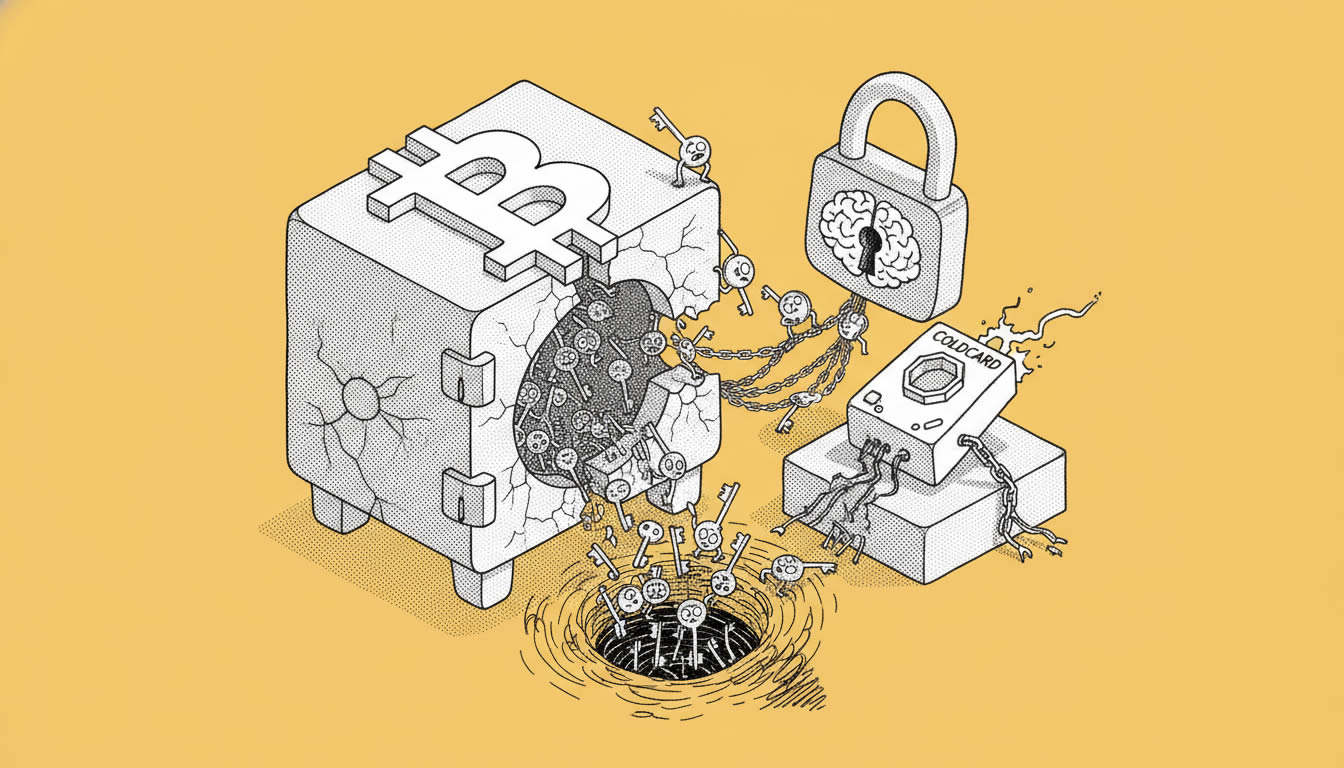
A five-year-old firmware build error in Coldcard hardware wallets turned one of Bitcoin’s most trusted self-custody tools into the largest hardware wallet exploit on record. Starting July 30, 2026, attackers exploited weak entropy in seed generation—routing through a software PRNG instead of the intended hardware RNG—draining roughly 1,600–2,000 BTC (estimates ranging $116–130 million) across thousands of addresses in successive waves. No physical access, no phishing, no social engineering. Just math against predictable keys.
The on-chain response was immediate and massive. CryptoQuant data shows small-holder transfers (sub-1 BTC) hit 39.6K BTC on July 31—nearly identical to the 39.9K BTC moved in the days after FTX’s collapse in November 2022. Daily active addresses jumped from ~645K to nearly 1 million, the highest since December 2024, driven almost entirely by sending addresses. Long-term holder spending by non-exchange wallets surged to a 30-day sum of 406K BTC by early August, the highest since mid-January. Exchange reserves rose by about 17.5K BTC in the following days, with Binance absorbing roughly 51% of the net increase (~9K BTC).

Santiment captured the psychological damage in real time. Bitcoin’s positive-to-negative social commentary ratio collapsed to historic lows—around 0.54–0.58—meaning bearish comments nearly doubled bullish ones across X, Reddit, Telegram and elsewhere. The fear hit harder than several past major events because it struck the sacred “not your keys, not your coins” layer rather than another exchange or bridge.
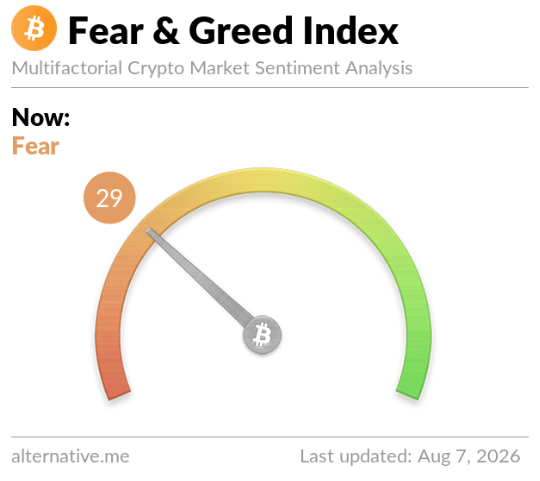
Yet the same data reveals a classic transfer of coins from weaker to stronger hands. Santiment’s key stakeholder cohort (wallets holding 10–10,000 BTC) added over 19,600 BTC since late July while micro wallets (<0.01 BTC) reduced holdings. Whales and sharks absorbed the retail shakeout. Price action stayed relatively contained in the low-to-mid $60Ks, suggesting the forced migration did not trigger a full capitulation cascade.
Healthy redistribution or lasting blow?
This looks more like a stress-test migration than a permanent rejection of self-custody. Many of the movers were sophisticated long-term holders who chose Coldcard precisely because it was considered the gold standard. Their rapid response—new seeds, consolidation, temporary exchange parking—demonstrates network resilience and user awareness. The spike in activity and dormant coin movement is the blockchain doing what it is supposed to do when trust in a specific implementation fails.
That said, the narrative damage is real. For years the industry sold hardware wallets as the final, airtight answer to exchange risk. A single build flag left in firmware for five years, missed by both human and AI review, has reopened the debate. CZ and others have already pointed out that cumulative self-custody losses (lost keys, exploits, user error) are harder to track but may already rival or exceed high-profile exchange hacks. Temporary inflows to Binance and other venues, plus rising ETF interest, show some capital seeking the relative simplicity of institutional custody while the dust settles.
The decisive question is not whether coins moved, but where they settle. If a meaningful portion remains on exchanges or migrates permanently into ETF wrappers, the self-custody ethos takes a measurable hit. If the majority cycles back into better-practiced self-custody—fresh entropy, multisig, independent audits, diversified hardware, air-gapped workflows—the episode becomes a painful but necessary upgrade cycle.
Bitcoin has survived Mt. Gox, FTX, and countless protocol and implementation failures. The Coldcard event is another reminder that “don’t trust, verify” applies to the tools that generate the keys themselves. The on-chain fingerprints show users reacting, key stakeholders accumulating, and the network remaining intact. Whether this becomes a lasting preference shift toward custodians or a catalyst for stronger self-custody standards will be written in the next few months of flow data.
The migration is underway. The test of the narrative is still open.
If you found this analysis useful, subscribe to Cryptopress for more on-chain research and crypto writing:
https://cryptopress.substack.com/subscribe