


- Senate Banking Committee advances CLARITY Act 15-9 with two Democrats joining Republicans.
- Bill provides clearer SEC/CFTC jurisdiction split, digital commodity classifications, and DeFi protections.
- Next steps include merger with Agriculture Committee bill and full Senate vote requiring 60 votes.
- Market reaction positive, with Bitcoin reclaiming $81,000 and XRP/DOGE surging.
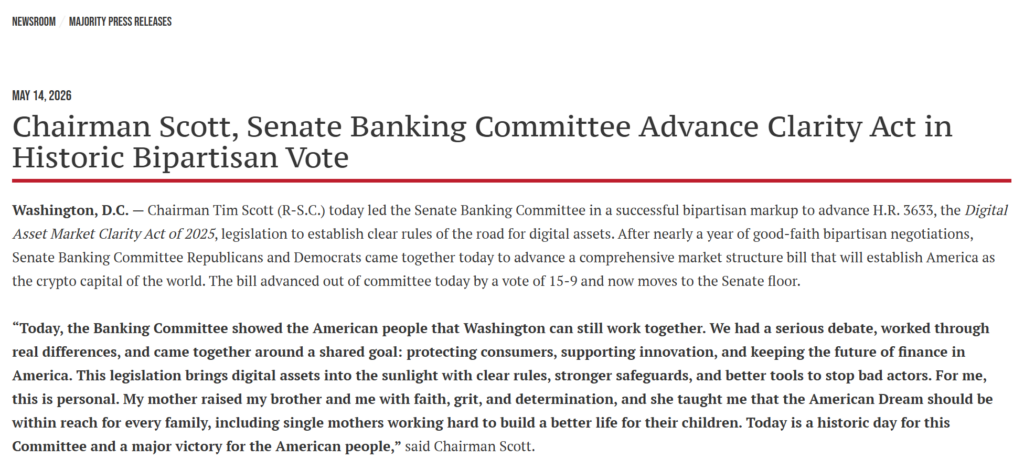
The U.S. Senate Banking Committee advanced the Digital Asset Market Clarity Act (CLARITY) in a 15-9 bipartisan vote on May 14, 2026, delivering a significant milestone for crypto regulation after months of negotiations.
Chairman Tim Scott (R-S.C.) led the markup, securing support from all Republicans and Democratic Senators Ruben Gallego and Angela Alsobrooks. The vote followed debate on over 100 amendments addressing consumer protections, national security, and ethics concerns.
The legislation aims to establish clear rules for digital asset markets by splitting oversight between the SEC and CFTC, classifying many tokens as digital commodities, offering DeFi developer protections, and setting frameworks for stablecoins while limiting certain CBDC activities. It builds on prior bipartisan efforts and follows the House’s passage of its version last year.
During the session, Ranking Member Elizabeth Warren criticized the bill as industry-favoring, while supporters like Senator Cynthia Lummis highlighted its pro-consumer and law enforcement benefits. Last-minute amendments on investor protections and DeFi definitions helped secure broader support.
Industry leaders welcomed the progress. Blockchain Association CEO Summer Mersinger called it a “defining moment” for durable policy. The bill now heads toward a merger with the Senate Agriculture Committee’s version before a full Senate floor vote, which will require 60 votes.
Analysts note challenges remain, including ethics provisions related to public officials’ crypto involvement and further law enforcement safeguards. Passage this year is seen as critical ahead of midterm elections.
The news coincided with positive market moves: Bitcoin rose above $81,000, while XRP and DOGE gained around 5%. Coinbase and other crypto-related stocks also advanced.
Senator Scott emphasized the bill’s focus on innovation, consumer protection, and security. Further negotiations are expected to address remaining concerns from both parties.
Disclaimer: This article is for informational purposes only and does not constitute advice of any kind. Readers should conduct their own research before making any decisions.