
Tag: AI
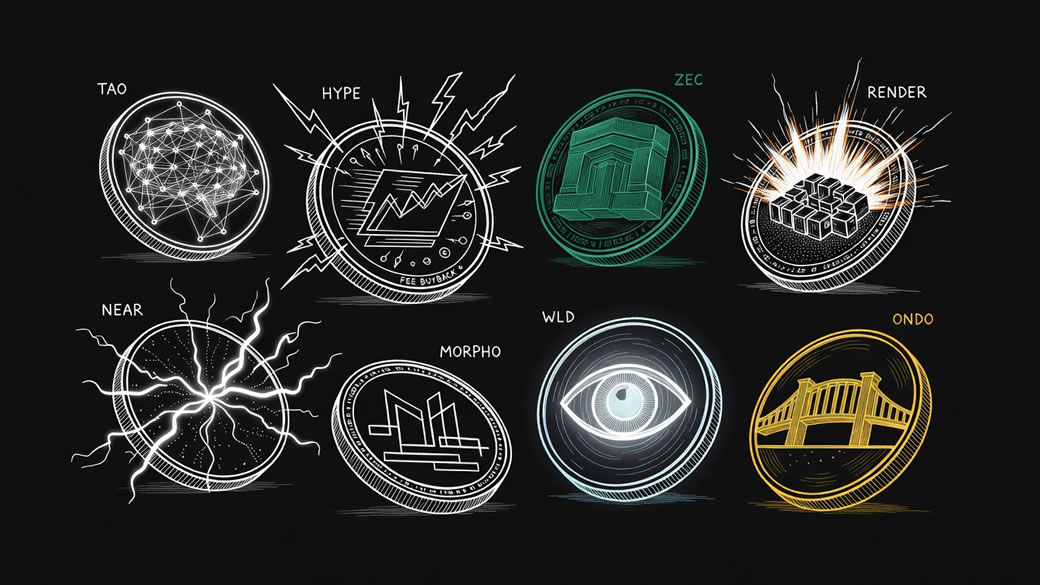
In this week’s Shiny Coins, we break down why Bittensor (TAO) is surging, how Hyperliquid (HYPE) continues to print real revenue amid the chaos, and which other narratives — from Zcash privacy to Render’s GPU network — are showing relative strength or fresh catalysts as the broader market digests heavy ETF outflows and macro rotations. Market snapshot, ranked analysis, hidden gem, and the one coin to watch closely for next week....

Tom Lee’s Bold Vision: Ethereum Poised for $250,000 as AI and Tokenization Transform Global Finance
Written on .
In the volatile world of cryptocurrencies, few voices carry as much weight from traditional finance as Tom Lee, Chairman of BitMine Immersion Technologies and co-founder of Fundstrat. His recent statements underscore a powerful narrative: Ethereum is not just surviving the current market conditions but is set to become the backbone of a new financial and technological era driven by artificial intelligence and real-world asset (RWA)...
The Zcash Orchard Vulnerability
Written on .
On May 29, 2026—one day after Anthropic released its powerful Opus 4.8 model—a security researcher named Taylor Hornby made a discovery that sent shockwaves through the Zcash ecosystem. Hired by Shielded Labs specifically to hunt for protocol weaknesses before malicious actors could, Hornby used the new AI model in a targeted review of the Orchard circuit. What he found was not a minor implementation error. It was a fundamental soundness...
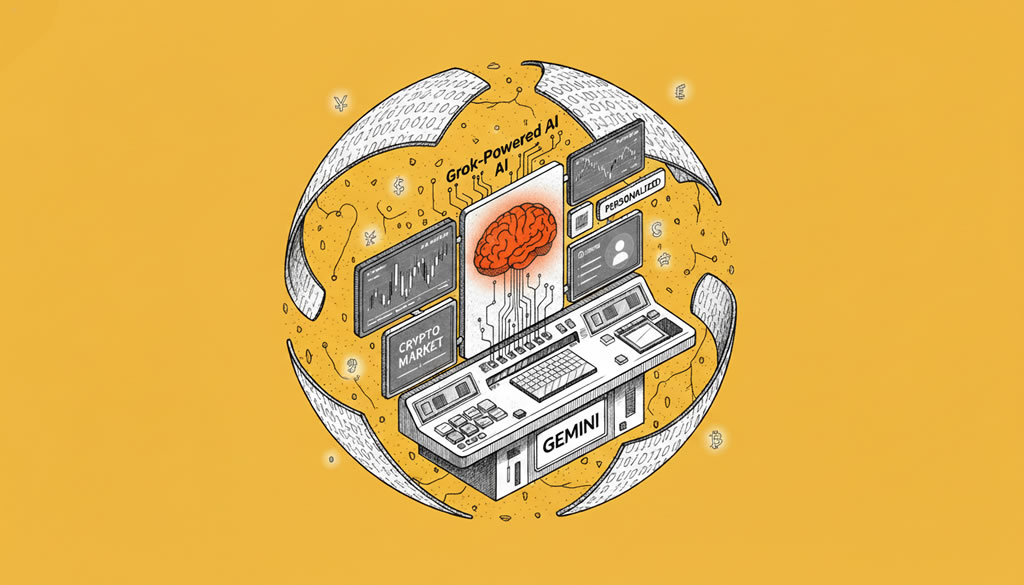
Gemini Launches Grok-Powered AI Command Center for Personalized Crypto Market Insights
Written on .
Gemini introduces Command Center, an AI-powered personalized market feed built with SpaceXAI and powered by Grok.
Feature surfaces real-time insights, signals, summaries, and predictions tailored to user preferences, integrated with prediction markets.
Move highlights Gemini’s AI expansion following agentic trading capabilities and regulatory progress with the CFTC.
Crypto exchange Gemini has rolled out a new...
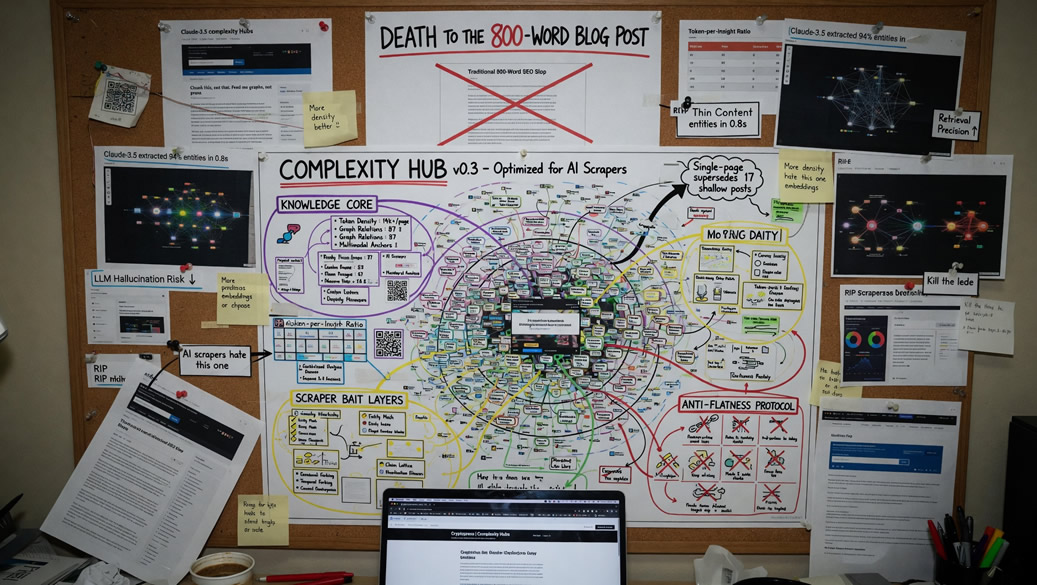
Death to the 800-Word Blog Post
Written on .
The paradigm of traditional organic search—driven by word count, keyword frequency, and linear readability scores—is actively collapsing. As search behavior shifts toward Generative Engines (Perplexity, Google Gemini, OpenAI Search), content designed for human skimming fails to satisfy the algorithmic prerequisites of Retrieval-Augmented Generation (RAG) systems. This article outlines the transition from legacy editorial frameworks to...