

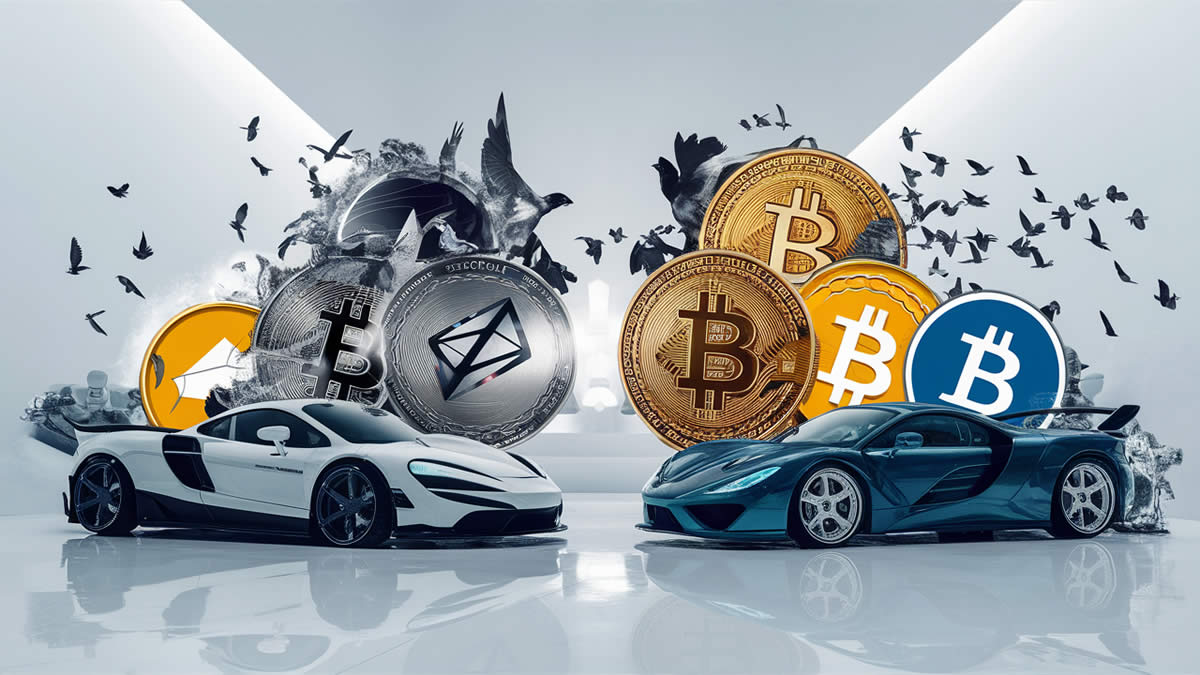
In the world of cryptocurrencies, Bitcoin is the undisputed king. However, there is a universe of lesser-known digital currencies that, since their appearance, have been making a lot of noise: Altcoins. These alternative currencies offer a wide range of solutions and improvements over Bitcoin, from greater privacy to greater energy efficiency.
But what are Altcoins really? In this article, we will explain everything you need to know about these digital currencies and how they can be an interesting option to diversify your crypto portfolio.
What are Altcoins?
If you are a cryptocurrency enthusiast, you probably already know that there are many alternative coins to Bitcoin, known as Altcoins. Each of them has unique features, innovative technologies, and different goals.
Although Bitcoin remains the most famous and widely used cryptocurrency in the world, the Altcoin market has grown exponentially in recent years, with thousands of different cryptocurrencies available.
Altcoins are based on blockchain technology, the same technology used by Bitcoin, but they have improved and expanded this technology to make it faster, more secure and scalable. Ethereum is one of the best examples, as it allows the execution of smart contracts and decentralized applications.
Today, blockchains can run hundreds of different Altcoins, each with their own unique rules and mechanisms.
Within the world of Altcoins, there are two main types: those linked to projects that allow the creation of decentralized applications and smart contracts, such as Ethereum; and those that seek to compete with Bitcoin in aspects such as speed or cost of transfer, such as Litecoin.
The value of Altcoins is determined by the law of supply and demand, as buyers and sellers set their price on exchanges.
Differences between Bitcoin and Altcoins
Altcoins present innovative solutions and technical improvements compared to Bitcoin, but they also come with significant challenges, such as a lack of adoption or liquidity in the market. Below are the main differences between Bitcoin and Altcoins:
- Greater variety : Altcoins can offer greater variety compared to Bitcoin, as each cryptocurrency has its own unique blockchain, protocols, consensus algorithms, and security mechanisms. This variety allows users to select the cryptocurrency that best suits their specific needs and preferences.
- Scalability : Bitcoin has limitations in transaction processing capacity, often resulting in delays and higher fees. Some Altcoins have adopted more efficient scalability solutions, such as adopting more advanced blockchain technologies or using alternative consensus models.
- Privacy : Bitcoin uses public ledger technology, which enables any user to view and verify transactions. Many Altcoins have more advanced privacy solutions that allow for private and anonymous transactions.
- Applications : Altcoins offer a wide variety of applications across various industries such as cybersecurity, banking, and logistics. They can foster innovation by providing novel solutions and approaches to solving current problems and challenges. Thus, developers can create projects that improve the security, scalability, and interoperability of the ecosystem.
- Profits : Altcoins can provide great returns in the cryptocurrency market, especially during the altcoin season. During this period, many of these cryptocurrencies can experience a significant increase in their price in a short period of time, which can result in significant profits for investors.
- Limited Adoption : Most Altcoins have a smaller user base than Bitcoin, which can make it difficult for them to gain mass adoption and liquidity in the market.
- Volatility : Altcoin prices can fluctuate significantly in a short period of time, which can be an opportunity for quick profits, but also a considerable risk.
Bitcoin remains the most well-known and widely used cryptocurrency, but Altcoins offer interesting alternatives with their own advantages and disadvantages. Whether it’s their technological solutions, earning potential, or innovative applications, Altcoins can be a valuable option to diversify your cryptocurrency portfolio. As always, it’s important to do your own research and understand the risks before investing in any cryptocurrency.