
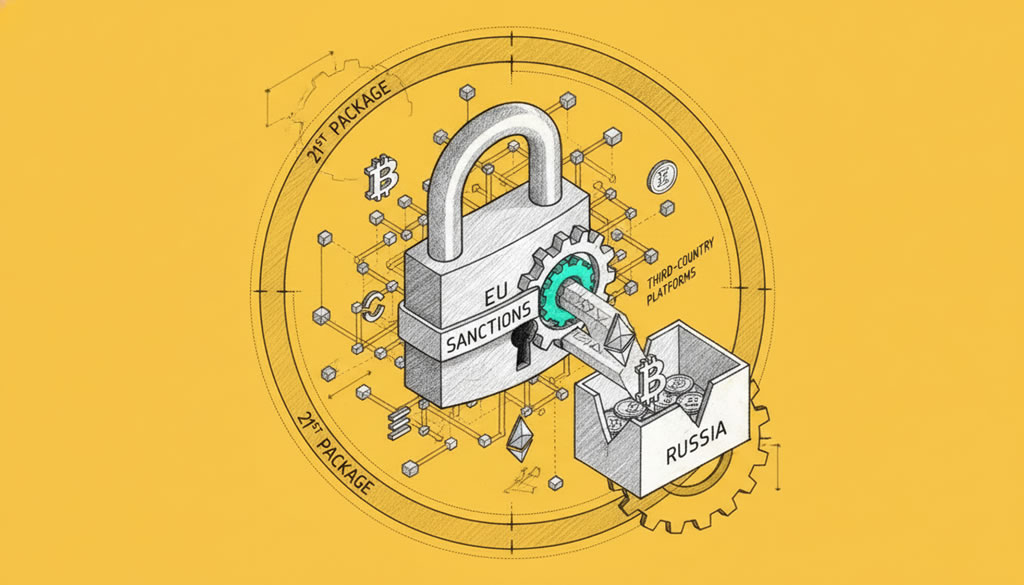
- The European Commission proposed the 21st sanctions package focusing on energy, finance, crypto, trade, and fisheries.
- Measures include transaction bans on additional Russian banks and 20 third-country entities, including crypto platforms.
- For the first time, the EU eyes a full ban on crypto-asset services from non-EU countries hosting evasion platforms.
- The move aims to close loopholes amid rising illicit crypto volumes linked to Russia.
The European Union is intensifying its efforts to curb Russia’s ability to evade sanctions through cryptocurrency, with the European Commission announcing proposals for its 21st sanctions package on Tuesday.
Key to the package are expanded financial and crypto restrictions, building on previous measures that have increasingly targeted digital assets as a vector for circumvention. European Commission President Ursula von der Leyen highlighted the focus on high-impact sectors including energy, financial services, crypto, trade, and—for the first time—fisheries.
The proposals include expanding transaction bans to 31 additional Russian banks and to 20 banks, crypto firms or platforms, and oil traders in third countries accused of servicing sanctioned Russian entities or helping evade existing measures. Critically, the Commission is introducing the possibility of a full third-country ban on crypto-asset services for the first time.
“It will act as a strong deterrent for the countries hosting platforms that help Russia evade our sanctions,” von der Leyen stated in the announcement.
This development comes as blockchain analytics highlight the scale of the challenge. Illicit crypto addresses received $154 billion in 2025, with a significant 694% surge in volumes to sanctioned entities, according to Chainalysis. Russia-linked activity, including through ruble-backed stablecoins like A7A5 which processed $93.3 billion, has been a notable factor.
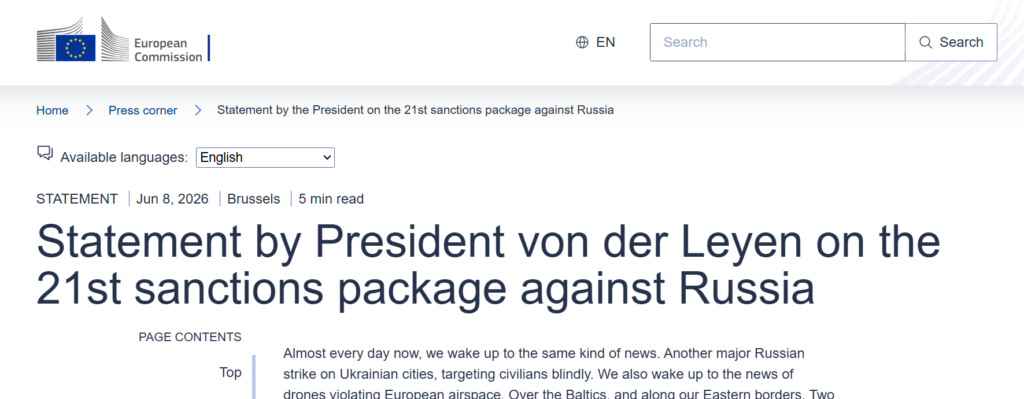
https://ec.europa.eu/commission/presscorner/detail/en/statement_26_1314
Earlier actions, such as the UK’s sanctions on HTX (formerly Huobi) and identifications of exchanges filling gaps left by previously targeted platforms like Garantex, underscore ongoing efforts to disrupt these networks. The EU’s 20th package already introduced broader bans on Russia-based crypto service providers.
The proposals require unanimous approval from EU member states and reflect a maturing sanctions strategy that treats crypto infrastructure as a core enforcement priority rather than a peripheral issue. Russia, meanwhile, continues developing its domestic crypto regulatory framework, expected in July, which could further shape alternative payment rails.
Industry observers note that while such measures aim to limit evasion, they also raise questions about impacts on legitimate crypto activity and the broader push for compliant innovation in the sector. As one analytics firm has observed, transparency on blockchain aids in identifying and disrupting these flows.
The package broadens restrictions across energy (including oil price cap enforcement and shadow fleet vessels) and trade, signaling sustained pressure on Russia’s war economy.
Disclaimer: This article is for informational purposes only and does not constitute advice of any kind. Readers should conduct their own research before making any decisions.