

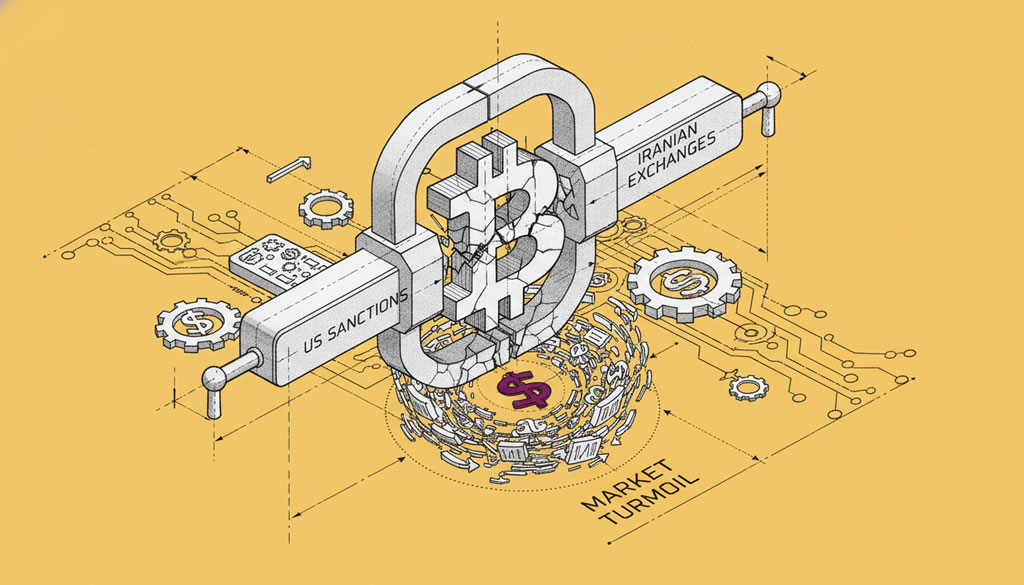
- U.S. Treasury sanctions Nobitex, Wallex, Bitpin, and Ramzinex for alleged ties to IRGC and sanctions evasion.
- Bitcoin dips amid broader market pressures, trading near $66,000-$67,000 levels.
- Action marks intensified economic pressure on Iran amid geopolitical tensions.
The U.S. Treasury Department has imposed sanctions on several of Iran’s largest cryptocurrency exchanges, including Nobitex, as part of its ongoing campaign against the Iranian regime’s efforts to circumvent Western financial restrictions.
Announced on June 2, 2026, the measures target Nobitex — Iran’s biggest digital asset platform — along with Wallex, Bitpin, and Ramzinex, plus associated executives. The Office of Foreign Assets Control (OFAC) cited links to terrorist financing, the Islamic Revolutionary Guard Corps (IRGC), and sanctions evasion activities.
This development comes as Bitcoin and the broader crypto market face renewed selling pressure, with BTC recently trading around $66,000-$67,000 after dipping below key psychological levels. Market observers note the interplay between geopolitical risks and crypto price action.
According to Treasury statements, Nobitex has processed significant volumes tied to IRGC-linked entities and helped facilitate transactions for sanctioned parties. The sanctions prohibit U.S. persons and entities from engaging with these platforms, aiming to disrupt Iran’s use of crypto for evading restrictions.
https://home.treasury.gov/news/press-releases/sb0519
Industry implications: While Iranian exchanges operate primarily outside major Western compliance frameworks, the move underscores growing regulatory scrutiny on crypto’s role in global geopolitics. It may accelerate compliance efforts across the sector but also highlights persistent challenges in cross-border digital asset flows.
Bitcoin’s recent weakness aligns with macro factors, including risk-off sentiment in traditional markets. Analysts point to ETF flows, corporate sales, and geopolitical headlines as contributing elements to the current consolidation.
A stakeholder perspective from regulatory discussions emphasizes the need for balanced oversight: one industry voice noted that such actions “target illicit use without broadly stifling innovation,” though Iranian users and smaller platforms may face short-term disruptions.
The sanctions fit into the Trump administration’s “Economic Fury” approach, seeking to pressure Iran’s nuclear and regional activities through financial isolation.
Market context remains fluid, with traders monitoring support levels around $65,000 for Bitcoin and potential further volatility tied to U.S.-Iran developments.
Disclaimer: This article is for informational purposes only and does not constitute advice of any kind. Readers should conduct their own research before making any decisions.