
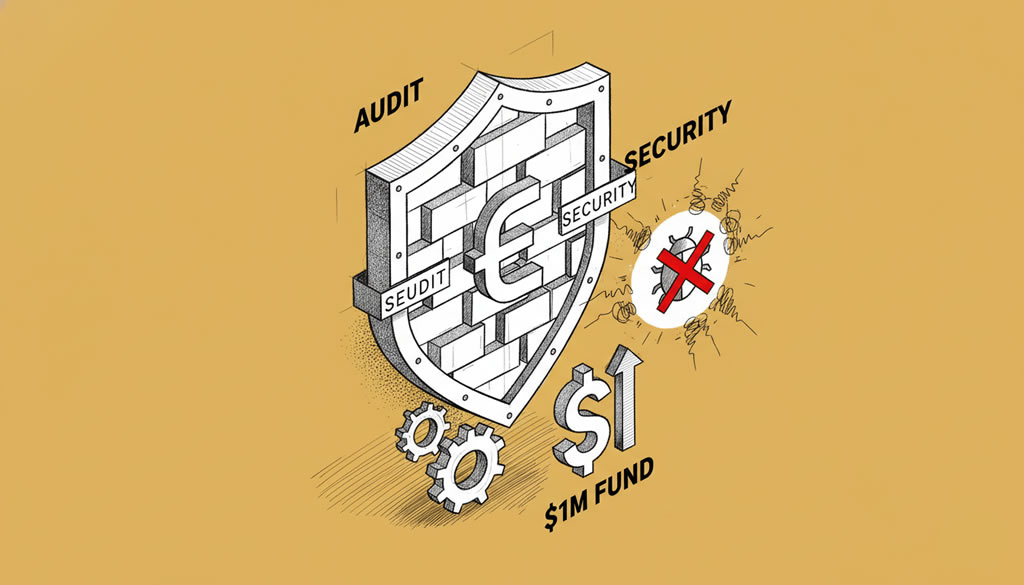
- Program launch: Ethereum Foundation announced the $1 million Audit Subsidy Program on April 14, 2026, to address high costs of smart contract security audits.
- Subsidy details: Pool covers up to 30% of audit fees for selected Ethereum mainnet projects, with funds applied directly through Areta’s platform.
- Audit access: Connects builders to more than 20 leading firms including Nethermind and Chainlink Labs via an expert committee review process.
- Eligibility focus: Open to all Ethereum mainnet builders; prioritizes projects advancing new use cases and CROPS principles (censorship resistance, open source, privacy, security).
- Ecosystem goal: Part of the foundation’s Trillion Dollar Security initiative to strengthen Ethereum as it scales to handle larger on-chain value.
The Ethereum Foundation has introduced a targeted measure to lower one of the biggest barriers facing crypto developers: the expense of professional smart contract audits.
On April 14, 2026, the foundation launched its $1 million Audit Subsidy Program, designed to subsidize a portion of security review costs and broaden access to top-tier auditors. The program operates in partnership with Areta, which handles applications and disbursement, and connects approved projects to more than 20 leading audit firms including Nethermind and Chainlink Labs, according to CoinDesk.
Eligible teams—open to Ethereum mainnet builders of any size or stage—submit proposals for review by an expert committee. Approved subsidies are applied directly to audit services, with some reports indicating coverage of up to 30% of fees. The initiative forms part of the foundation’s ongoing Trillion Dollar Security effort, which aims to enhance protocol resilience as Ethereum supports more complex applications and higher-value activity.
In its announcement on X, the Ethereum Foundation stated: “The subsidy program makes audits accessible and strengthens the Ethereum ecosystem.” The post links to application details via Areta and underscores the program’s role alongside the newly introduced CROPS principles framework guiding development priorities around censorship resistance, open source, privacy, and security.
Industry observers note that comprehensive audits remain an industry best practice yet are frequently skipped by smaller teams due to cost. By reducing that financial hurdle, the foundation hopes to raise overall security standards and reduce the risk of exploits across DeFi, NFTs, and other Ethereum-based projects. No cap per project was specified, but the $1 million pool will be allocated based on committee decisions.
The move arrives amid continued growth in Ethereum’s ecosystem and follows the foundation’s earlier mandate updates defining its core role in supporting long-term network health. While the subsidy does not eliminate all audit-related expenses, it provides a practical step toward making professional security reviews more attainable for a broader range of builders.
Disclaimer: This article is for informational purposes only and does not constitute advice of any kind. Readers should conduct their own research before making any decisions.