
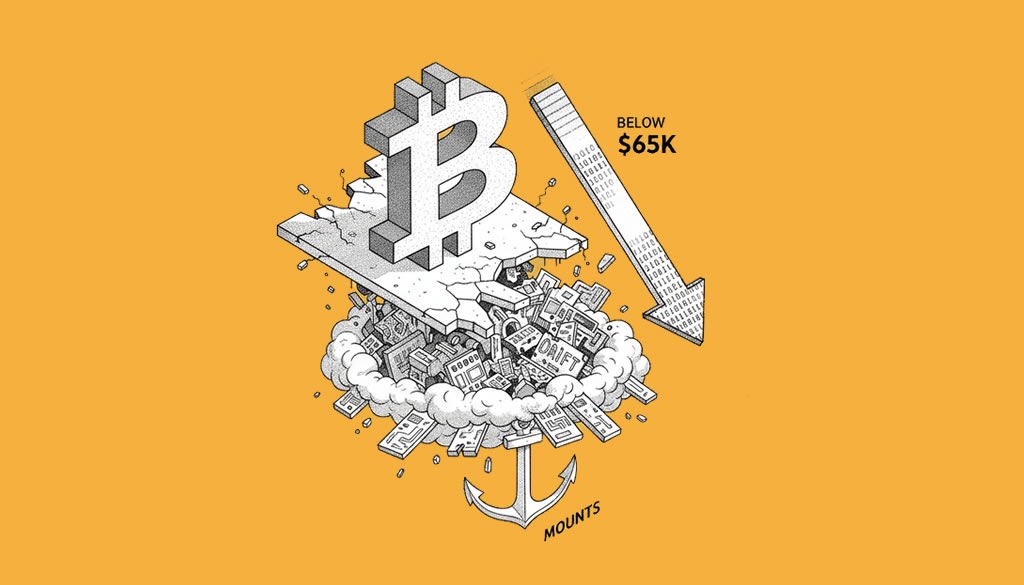
- Bitcoin fell 4.6% from $67,600 to $64,435 in under two hours during early Asian trading on February 23, 2026.
- Over $505 million in crypto positions were liquidated in the past 24 hours, with Bitcoin accounting for $232 million and Ethereum $126 million.
- Long positions represented 93% of liquidations, totaling roughly $468 million across 137,000+ traders.
- The Crypto Fear & Greed Index dropped to an “extreme fear” reading of 5/100, a level not seen since earlier 2026 downturns.
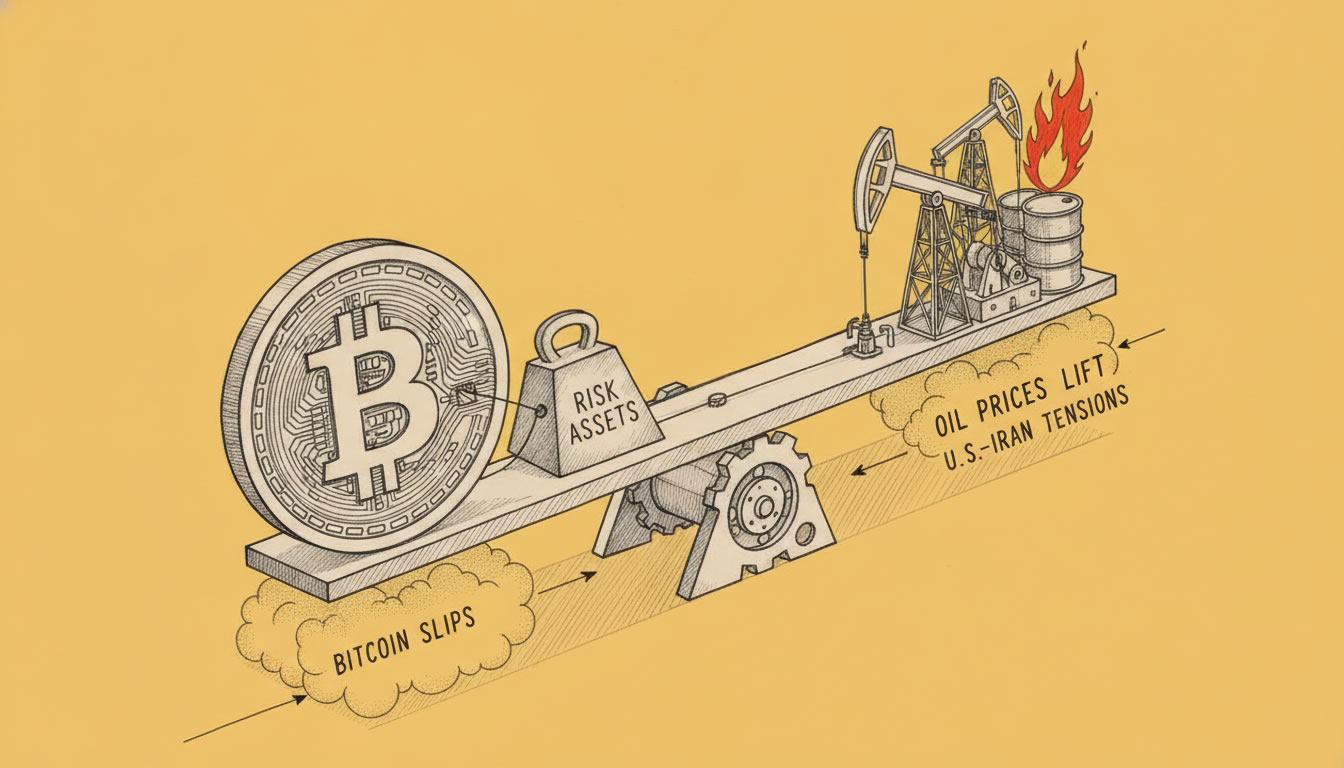
- Analysts cite U.S. tariff policy uncertainty and geopolitical risks as key drivers, with no major crypto-specific catalyst.
Bitcoin experienced sharp volatility Monday as it briefly traded below $65,000, erasing weekend gains and amplifying downside pressure across risk assets.
The leading cryptocurrency dropped from around $67,600 to a low of $64,435 in less than two hours amid early Asian trading hours. At the time of reporting, BTC had partially recovered to trade near $66,280, still down approximately 2.7% on the day.
This price action triggered more than $505 million in liquidations across cryptocurrency futures markets, per data from CoinGlass. Bitcoin and Ethereum positions accounted for nearly 70% of the total, with long-side liquidations dominating at 93%, or about $434 million, as detailed in a CoinDesk report. A single $61.5 million BTC position on HTX marked the largest individual liquidation.
The sell-off unfolded against a backdrop of renewed U.S. trade policy uncertainty. The Supreme Court recently struck down much of President Donald Trump’s “reciprocal” tariffs under the International Emergency Economic Powers Act. In response, the administration announced a 10% global tariff hike—later raised to 15%—under alternative authority, injecting fresh volatility into markets already sensitive to macro signals.
“The downturn was not triggered by a sudden ‘black swan’ event or unexpected negative news. Instead, it was driven by policy uncertainty stemming from fluctuations in U.S. tariff policy, compounded by rising geopolitical risks,” said Tim Sun, senior researcher at HashKey Group. Sun added that crypto assets remain “firmly anchored at the far end of the risk curve,” making them vulnerable when traditional risk appetite contracts.
Supporting data underscored the capitulation. The Crypto Fear & Greed Index hit its lowest level in months at 5 out of 100, while Glassnode tracked nearly $500 million in daily net realized losses among short-term Bitcoin holders. Prediction markets via Myriad showed the probability of Bitcoin reaching $84,000 in the near term falling to 37% from 46% just days earlier.
Beyond tariffs, sticky inflation readings and shifting Federal Reserve rate-cut expectations—now pricing out aggressive easing before July—further weighed on sentiment. Gold, meanwhile, rose over 1% as investors sought safety.
For crypto investors and traders, the episode highlights persistent correlation with traditional macro factors. While brief technical bounces are possible, sustained recovery likely requires stabilization in equities and clearer policy signals. With BTC still trading well below its 2025 highs near $126,000, downside risks remain if geopolitical or trade tensions escalate further.
Disclaimer: This article is for informational purposes only and does not constitute advice of any kind. Readers should conduct their own research before making any decisions.